AI agents vs chatbots: what works in production for chat and voice
Articles
BLOG DETAILS26 FEB 2026Updated 06 MAR 20269 min read
What is the real difference between a chatbot and a production-ready AI agent? A practical guide to guardrails, escalation, logging, voice agents, and safe automation.
An AI agent that cannot fail safely is not a smart innovation. It is an operational risk with a polished interface.
That is exactly where many businesses get it wrong. They see an impressive demo, hear how smoothly the system responds, and assume they are ready for production. But production is not a demo environment. Production means exceptions, incomplete data, angry customers, edge cases, compliance, misunderstandings, and moments when the only correct answer is: this needs a human.
That is the real difference between a chatbot and a production-ready AI agent. Not the model. Not the hype. Not how ?human? it sounds. The difference is in the architecture, the boundaries, the logging, the human handoff, and whether the system remains reliable once things get messy.
For companies that want to take AI automation seriously, this is where the conversation needs to mature. The question is not: can we add a chatbot? The question is: what work do we want to remove safely, scalably, and measurably?
People do not want a chatbot, they want less operational friction
#ai agents#chatbots#voice agents#production ai#ai automation#chatbot vs agent#business automation
When a business owner or team lead says, ?We want an AI chatbot,? they rarely mean that they literally want a chat window on their website. What they usually mean is something else.
They want fewer repetitive questions.
They want faster follow-up.
They want less manual routing.
They want leads to stop slipping through the cracks.
They want support to stop getting bogged down by routine requests.
They want scalability without immediately hiring more people.
So the chatbot is not the goal. It is just the interface. The real goal is operational relief.
That distinction matters, because a simple chatbot often only solves the top layer: the conversation. A production-ready AI agent solves the workflow underneath the conversation.
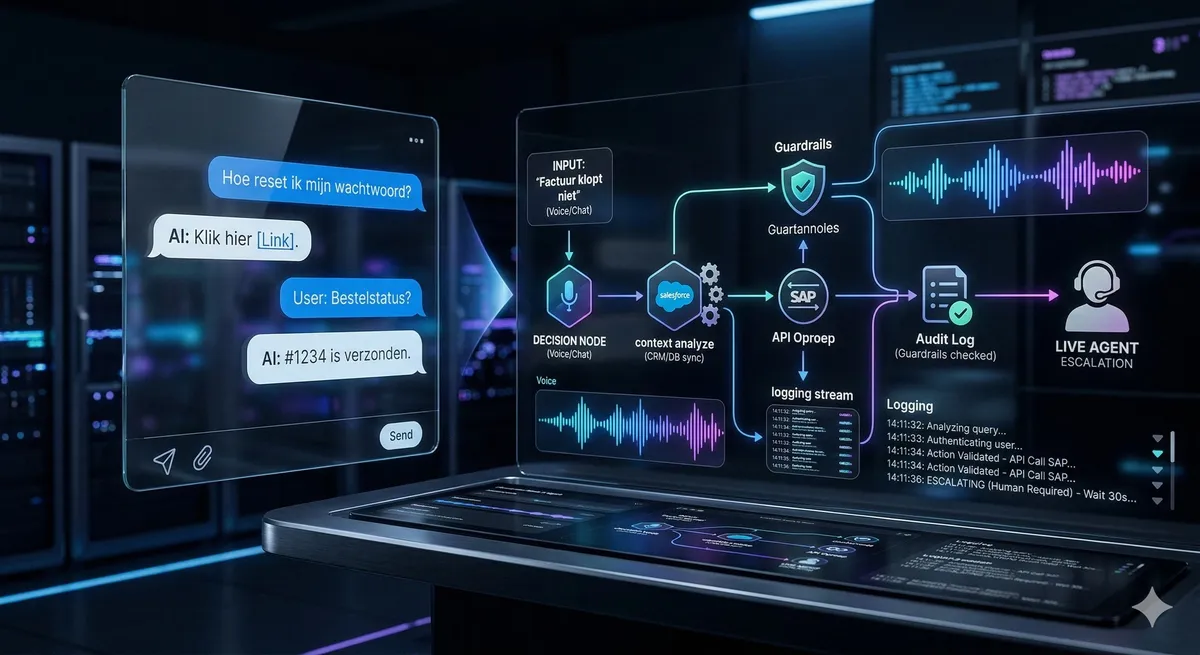
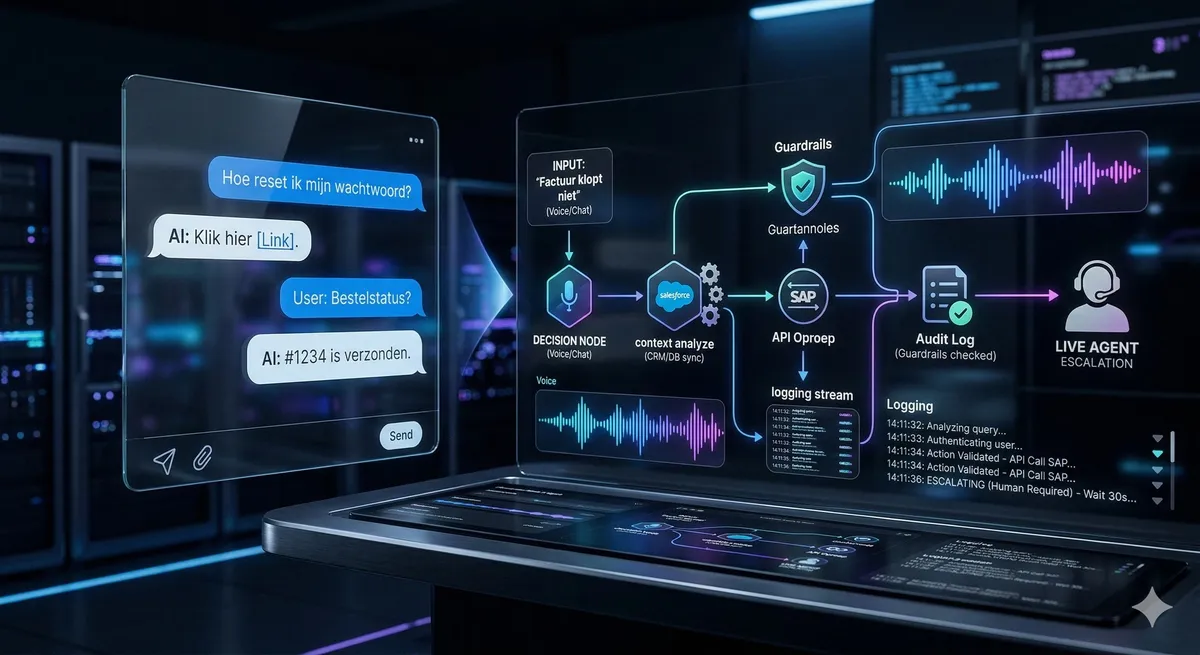
A chatbot answers. A production AI agent answers, interprets, decides, acts, escalates, logs, and reports within clear boundaries.
And that is where business value starts. Not because AI sounds exciting, but because a well-designed agent saves time, increases consistency, reduces mistakes, and improves customer experience without making the business lose control.
What is the difference between a chatbot and an AI agent?
A chatbot is usually built to answer questions. That can work well for simple use cases such as opening hours, basic information, frequently asked questions, or a first-line intake. But the moment context, systems, decisions, or actions become part of the process, you are in a different category.
An AI agent goes beyond answering. It can retrieve information, apply logic, trigger actions, and decide when something falls outside its boundaries. That makes an agent not just a communication layer, but part of your operational process.
In practice, you can think about the difference like this:
A chatbot is mainly suited for:
simple FAQs
standard answers from a knowledge base
first-line website or customer portal interactions
low complexity and low risk
An AI agent is mainly suited for:
lead qualification
intake and routing
support triage
appointment scheduling
CRM updates
notifications and follow-up
human handoff with context
A chatbot without workflow is often just another tool. An AI agent in production is a process layer.
The 4 types of AI agents businesses actually use
Not every agent needs to do everything. In fact, that is usually a bad idea. The best AI agents are narrow enough to be reliable, but capable enough to fully complete their task. In practice, most business implementations fall into four categories.
1. FAQ and knowledge agents
These are the easiest agents to start with. They answer factual questions from a defined source of truth, such as opening hours, return policies, product information, service conditions, or internal procedures.
The strength of this type of agent is predictability. If the source is good, the output can be good too. That is why they often create quick wins with relatively low risk.
Best use cases
websites with many recurring questions
internal helpdesks
customer portals
documentation environments
Business value
lower support pressure
faster response times
better customer experience
scalability without extra manual work
2. Qualification agents
Qualification agents collect information, structure it, and assess it against predefined criteria. Think of lead qualification, service intake, subsidy screening, application routing, or deciding which next step someone should enter.
This is often where commercial impact becomes obvious. A strong qualification agent prevents poor-fit leads from consuming too much time and ensures high-fit leads reach the right person faster.
Best use cases
inbound sales
intake flows
appointment preparation
requests and screenings
Business value
faster lead follow-up
more efficient sales operations
better prioritization
fewer warm leads lost
3. Support triage agents
This type of agent sits between first-line support and human specialists. The agent handles known, simple issues and recognizes when a case needs to be escalated. That makes triage especially valuable in customer service, logistics, scheduling, and aftersales.
The success of this kind of agent depends almost entirely on escalation logic. Not on how intelligent it sounds, but on how well it knows when to stop.
Best use cases
customer service
logistics questions
planning and field service
operational support
Business value
less manual triage
shorter wait times
better use of support capacity
more consistency in resolution
4. Action agents
These are the agents with the highest upside and the highest risk. They do not just make suggestions, they perform real actions. For example, booking appointments, creating tickets, updating CRM records, sending confirmations, or triggering workflows.
Action agents can unlock major cost savings and efficiency gains, but only if their permissions are tightly controlled. An agent with too much freedom does not create innovation. It creates chaos.
Best use cases
appointment scheduling
CRM updates
order status processes
notifications and follow-up
post-qualification sales workflows
Business value
less manual admin work
higher speed
fewer mistakes from repetitive copy-paste work
better scalability in operations
Why AI agents fail in production
Most AI projects do not fail because the technology cannot do anything useful. They fail because businesses move from demo to production too quickly without properly designing the operational layer. The patterns are remarkably consistent.
Too much trust in the model
One of the most common mistakes is assuming that a better model automatically creates a better production system. That is nonsense. A powerful model without clear boundaries is still unpredictable in the moments that matter most.
That is when you see agents:
invent policies that do not exist
quote prices that are incorrect
act as if something is available when no system has confirmed it
deliver wrong information with complete confidence
The problem is not just incorrect output. The problem is false confidence.
What actually works
Define explicitly what the agent has authority over. What is it allowed to confirm? What is it allowed to suggest? What must always be escalated? What must never be said without system verification?
No proper escalation path
Many teams design the happy path but ignore the exception. The result is an agent that keeps asking questions, repeating itself, or giving vague answers long after the situation clearly requires human intervention.
A good AI agent has no ego. It does not try to hold onto the conversation at all costs. It knows when to stop and hand over cleanly.
What actually works
Decide in advance:
when uncertainty is too high
when emotion or frustration is present
when financial, legal, or contractual nuance is required
when the agent does not have enough context
how human handoff should happen in practice
A handoff without context is poor design too. The employee should immediately see what has already been discussed, what information was collected, and why the escalation happened.
No logging and no visibility
Many businesses launch an AI solution and then have almost no visibility into what the system is actually doing. No structured logs, no error classification, no audit trail, no insight into escalations, and no understanding of recurring edge cases.
At that point, you cannot improve anything. You can only hope.
What actually works
Every interaction should be logged in a structured way. At minimum, you want to capture:
user input
context or sources used
agent output
decision points
actions executed
escalations
error reasons
final status
This is not only important for quality control, but also for management insight. It is where you find the patterns that lead to better processes, higher customer satisfaction, and smarter use of resources.
Too many permissions, too little control
An action agent with unrestricted access to your CRM, inbox, or calendar looks efficient right up until it creates incorrect updates, duplicates records, or triggers workflows that cannot easily be undone.
Least privilege is not a technical detail here. It is a baseline requirement. An agent should only have access to the systems and actions necessary for that exact job.
What actually works
Give agents:
minimal system access
limited write permissions
clear action boundaries
approval steps for irreversible actions
fallback routes when systems are unavailable
Production AI is not designed for the 95% that works. It is designed for the 5% that would otherwise cause damage.
Where voice agents actually shine
Voice agents get a lot of attention, but they are also often deployed in the wrong places. Companies hear a natural-sounding voice and assume it can replace phone-based support. That is too simplistic.
Voice works best when conversations are relatively structured, speed matters, and variation stays within clear boundaries. In those environments, a voice agent can create major efficiency gains and expand coverage.
Strong use cases for voice agents
appointment confirmations
reminders and rescheduling
order or delivery status updates
simple intake questions
first-line filtering before transferring the call
after-call summaries and CRM notes
This is where voice agents win because they save time, are instantly available, and can handle large volumes without necessarily creating a poor experience.
Where voice agents create risk
There are also situations where voice is simply not the right first choice. Especially not when nuance, empathy, or human judgment is essential.
Weak or risky use cases
complex complaints
emotional or sensitive conversations
price or contract negotiations
exception-heavy situations with lots of context
conversations where tone and trust are critical
A voice agent that stays in the conversation too long in these cases damages customer experience and brand trust faster than a chat agent would. That is because mistakes in voice feel more immediate and more human.
So voice is not ?better? than chat. It is only better in certain contexts.
Chat or voice: which one should you choose?
For many businesses, this is the practical question. Not: what is more modern? But: what works best operationally?
Choose chat when:
users prefer reading and clicking
information needs to be structured
links, forms, or menu choices are part of the flow
you want more control over pace and context
the process can happen step by step
Choose voice when:
speed matters more than detail
users are mobile or on the move
the conversation is short and structured
phone remains an important channel
you handle high volumes of repetitive interactions
In many cases, the right answer is not either-or, but a combination. Chat for intake and detail. Voice for reminders, confirmations, or first-line filtering. The strongest architecture follows the process, not the hype.
What a production-ready AI agent actually looks like
A good AI agent is not built like a trick. It is a controlled system with a clear job, predictable inputs, limited authority, and a human at the edge of the process.
The core components are almost always the same:
1. Clear scope
The agent has one clear task or a small cluster of related tasks. Not ?do everything,? but do something specific well.
2. Guardrails
There are rules for what the agent can and cannot do. Content-wise, technically, and operationally.
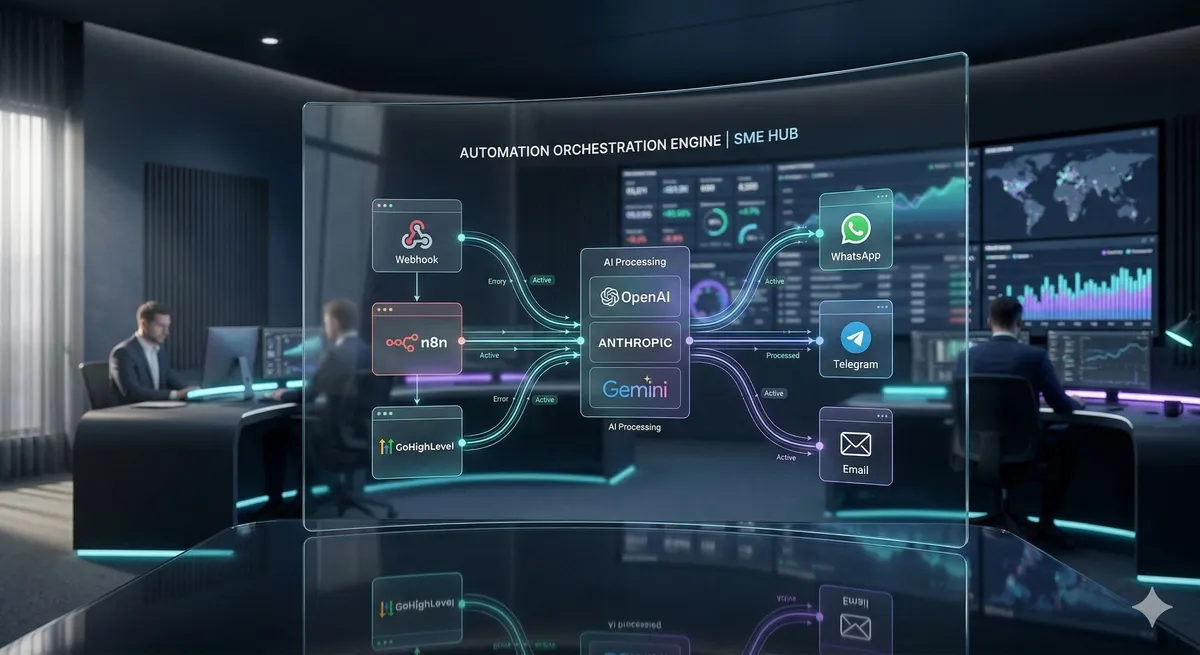
3. System integrations
Where needed, the agent reads from or writes to systems such as CRM, calendars, ticketing systems, or knowledge bases.
4. Escalation
When the agent moves out of scope, becomes uncertain, or detects risk, it hands over in a controlled way.
5. Logging and reporting
Everything is visible. Not only for auditing, but also for optimization and business decisions.
6. Human-in-the-loop where needed
Not every action should be fully autonomous. For higher-risk cases, approval layers are often the smart choice.
Practical business examples
The value of AI agents becomes much clearer when you connect them to concrete business processes.
For sales
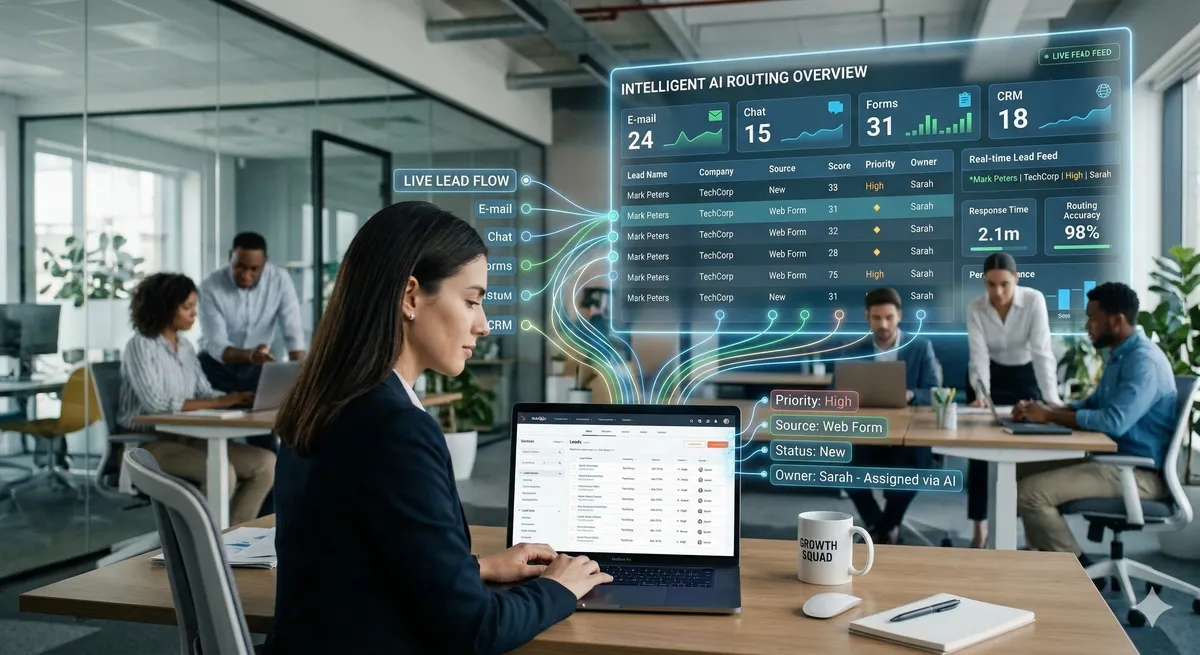
A qualification agent on the website can screen leads immediately, ask the right questions, assess urgency, and then route them automatically to the right pipeline or owner. That speeds up follow-up and improves conversion potential.
For support
A triage agent can handle standard questions instantly, categorize known issues, and transfer complex cases to a human with full context. That reduces operational pressure while helping customers faster.
For operations
An action agent can confirm appointments, process changes, create internal tasks, and send updates. That removes a lot of administrative work that is otherwise repetitive and error-prone.
For customer experience
A well-designed agent does not just improve efficiency. It also improves consistency. Customers get answers faster, get passed around less often without context, and experience a more professional process.
That is the point many businesses miss: AI agents are not only about cost savings. They are also about scalability, reliability, and competitive advantage.
Evaluation checklist before you go live
Before you put an AI agent into production, you should be able to answer the following questions clearly and without hand-waving.
Authority
What is the agent allowed to confirm, suggest, or execute? And what must always be validated by a human?
Escalation
When should the agent stop? Who receives the handoff? Through which channel? With what context?
Logging
Can you review every interaction and understand why a decision was made?
Fallbacks
What happens if a connected system is unavailable or returns incomplete data?
Irreversible actions
Are there actions that should only happen after human approval?
Kill switch
Can you immediately pause or disable the agent without breaking the customer journey?
Performance measurement
Which KPIs will you review weekly? Think of containment rate, escalation rate, error types, response time, appointment rate, customer satisfaction, and conversion impact.
If you cannot answer these questions clearly, the agent is not ready for production. It is that simple.
The real question is not chatbot or agent, but process or gimmick
Many businesses are still having the wrong conversation. They compare chatbots and AI agents as if the main issue is technology. But the real dividing line is somewhere else.
A simple chatbot is fine if you only want to deflect standard questions.
A production-ready AI agent is necessary when you want to support processes, use business data, execute actions, and manage risk.
That is why companies do not win with the most impressive AI demo. They win with the best operational implementation.
AI in business only works when it is:
clearly scoped
connected to a real process
able to fail safely
designed with smart human oversight
measurably better than manual work
That is where real scalability starts. Explore our services to see how we design production-ready AI agents.
Conclusion
The gap between a chatbot and an AI agent is bigger than most businesses think. A chatbot is an interface. An AI agent is an operational system.
Companies that see AI only as a smarter way to answer questions stay stuck in surface-level automation. To understand the difference, see how business process automation tackles the real bottlenecks. Companies that use AI to improve processes, remove friction, and make better use of human capacity build something that creates real value.
For both chat and voice, the same principle applies: not everything that can be automated should be automated. But whatever you do automate must be safe, controlled, and purposeful.
Businesses that get this right do not just save time and reduce costs. They build a stronger customer journey, better internal processes, and a real advantage over competitors still thinking in terms of isolated tools instead of systems design.
If you want an honest assessment of where AI agents could reduce operational friction in your business without creating more chaos, take the Free AI Audit.