AI agency vs AI consultant vs automation agency: how to choose the right partner
Articles
BLOG DETAILS26 FEB 2026Updated 06 MAR 20269 min read
Not sure whether to hire an AI agency, AI consultant, or automation agency? Discover the differences, common pitfalls, and decision criteria to choose the right AI partner.
Most companies do not fail with AI because they choose the wrong tool. They fail because they work with the wrong type of partner.
That may sound like a small distinction, but in practice it is often the difference between a system that creates clarity, scale, and profit, and a stack of disconnected tools that only adds complexity. First comes a chatbot. Then a standalone automation. Then a dashboard nobody uses. Before long, nobody truly owns the whole system.
The result is almost always the same: more apps, more handoffs, more exceptions, more dependence on external parties, and less control over operations.
That is exactly why choosing the right AI partner in 2026 is no longer a minor operational decision. It is a strategic one. Especially for SMBs and growth-stage companies using AI and automation to improve efficiency, scalability, cost savings, customer experience, and lead generation.
In this guide, you will get a clear framework to understand the difference between an , an , and an at the system level. Not in theory, but in practice: when to choose each one, where projects go wrong, and how to avoid investing in something that works against you later.
Most companies do not need ?AI help.? They need ownership.
The market is full of parties offering something related to AI. Consultants running strategy workshops. Agencies building workflows. Specialists implementing chatbots or agents. On paper, all of that sounds reasonable.
But the real question is rarely: who can build something with AI?
The real question is: who can take responsibility for a system that actually works in production and keeps working over time?
That is a fundamental difference.
Many companies think they have a technology problem when in reality they have an ownership problem. There are plenty of tools. There have often already been pilots. What is missing is a partner who can oversee the whole system and translate it into an operational setup with:
clear responsibilities
defined escalation paths
visibility into performance
reliable error handling
handover capability to the internal team
Without that, you end up with something that looks smart at first but is fragile underneath.
Why so many AI projects disappoint
AI projects rarely fail because the technology cannot do the job. They fail because the implementation does not match the operation.
A common pattern looks like this:
A company wants to respond faster to leads, support requests, or internal tasks. An automation gets built. Then an AI layer gets added. Then two more tools are connected for notifications, logging, or CRM sync. At first, it works. A few weeks later, the first exceptions appear. Something stops syncing properly. An employee creates a manual workaround. An extra step is added. Then another.
Before long, you no longer have a scalable system. You have an overly complicated setup that only works as long as nobody looks at it too closely.
That is the point where business owners start saying that ?AI is not mature enough yet,? when the real issue is usually simpler: the system was designed poorly or assigned to the wrong type of partner.
The three partner types: what is the difference?
Not every AI partner solves the same problem. That is exactly where many companies get it wrong. They compare providers based on price, branding, or tool knowledge, while what they really need to determine first is which type of partner fits their current stage and bottleneck.
AI consultant
An AI consultant is essentially a strategist. This type of partner helps map opportunities, risks, use cases, and priorities. The output is usually an advisory trajectory, roadmap, workshop, business case, or implementation plan.
When an AI consultant is the right choice
An AI consultant is a strong fit if you are still in the exploration phase and need clarity before committing budget or capacity. For example, when:
your leadership team wants to take AI seriously but has no clear priorities yet
there are many internal ideas but little structure
you first want to understand where AI can truly create impact
you need a business case or roadmap for decision-making
What an AI consultant does well
A good consultant brings focus. Not by recommending ten tools, but by identifying where the biggest value lies. That includes questions such as:
Which processes are suitable for automation and which are not?
Where are the biggest operational bottlenecks?
What risks exist around data, processes, and ownership?
What needs to be fixed first before AI can generate real returns?
Limitation of an AI consultant
The limitation is simple: consultants usually do not build through to production. They provide direction, not a live operating system.
That is not a criticism, but it is crucial to understand. A strong strategy without execution does not create scalability. So if you need live workflows, AI agents, integrations, and operational dashboards, a consultant alone will not be enough.
Automation agency
An automation agency focuses primarily on automating recurring tasks and workflows. Think of connecting tools, automating notifications, CRM updates, lead flows, email follow-up, data syncs, and internal manual steps.
When an automation agency is the right choice
This model works well when your processes are already fairly clear and mainly need to become faster, more consistent, or more cost-efficient. For example, if you want to:
route leads automatically
connect forms to your CRM
reduce manual admin
automate follow-up sequences
streamline repetitive tasks in sales, support, or operations
What an automation agency does well
An automation agency can often create tangible wins quickly. For SMBs especially, that is attractive because the impact is felt immediately in time savings, fewer mistakes, and faster follow-up.
Good automation agencies are strong at:
translating processes into workflows
integrating systems
quickly implementing practical use cases
improving day-to-day operations in a visible way
Limitation of an automation agency
The weakness appears when the actual need is bigger than workflow automation alone.
Many automation agencies are strong at triggers and actions, but weaker in system architecture. That creates the risk that individual automations work well, but the overall setup does not scale. Especially once exceptions increase, multiple teams become involved, or AI-driven decisions become part of the process.
An automation agency is often ideal for a clearly defined workflow. It is less ideal if you want to redesign an entire operational layer.
AI agency at the system level
An AI agency at the system level goes one step further. This type of partner does not just build automations. It designs and implements a cohesive system in which AI, workflows, data, dashboards, human oversight, and exception handling all fit together logically.
This is not about ?a cool AI solution.? It is about operational infrastructure.
When an AI agency is the right choice
An AI agency is the right fit when you do not just want to speed up a single task, but want to make an entire chain smarter and more scalable. For example, when you are working on:
designing end-to-end processes instead of disconnected automations
combining AI with business logic, data, and human handoff
building monitoring, logging, and audit trails from day one
keeping the system transferable and manageable for the client team
Limitation of an AI agency
The limitation is mainly scope and investment. Not every business immediately needs a full system layer. If you do not yet know where the real bottleneck is, or your operational foundation is still messy, an AI agency may be too heavy or simply too early.
In other words: an AI agency is powerful, but only if the problem actually calls for it.
The biggest mistake: hiring an executor for an architecture problem
Many companies hire an automation agency or freelancer when the real issue is not execution, but design.
You see this most often in companies that say they ?want to do more with AI? while their underlying processes are still unclear. What they get is a solution that automates something quickly, but does not solve why the process breaks in the first place.
A simple example: imagine a company is missing leads. You can automate notifications, let AI qualify leads, or automate follow-up. But if the real issue is unclear ownership, poor CRM discipline, or fragmented intake channels, then you are mostly automating chaos.
That may feel like progress for a while, but over time it makes the underlying problem more expensive.
The automation spaghetti pattern
There is a pattern you see in companies that have been ?doing AI? for months without generating real results.
They have multiple tools. A few disconnected automations. Maybe a chatbot. Maybe a dashboard. Maybe an agent that is supposed to answer internal questions. Individually, everything seems defensible. Together, it becomes fragile.
The pattern usually looks something like this:
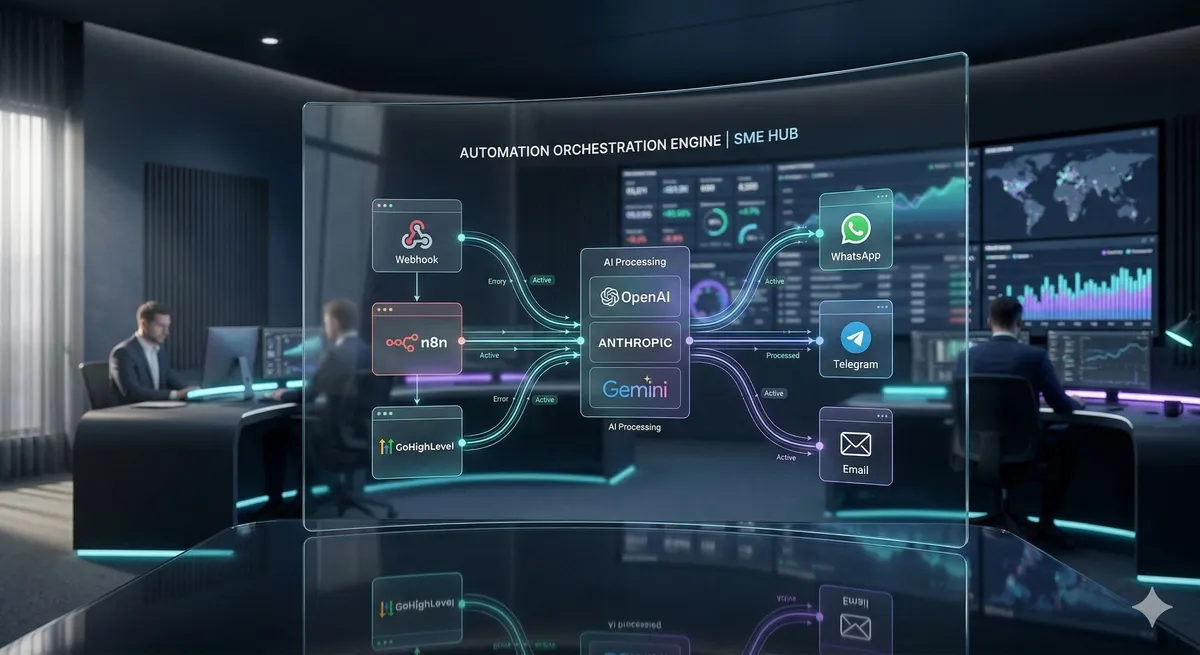
Tool A sends data to tool B
Tool B triggers an action in tool C
tool C writes back to the CRM
for exceptions, a Slack or email notification gets sent
nobody knows exactly who owns which piece
errors are fixed ad hoc
documentation is missing or outdated
This is automation spaghetti.
The problem is not too much automation. The problem is too little system thinking.
The solution is rarely more tooling. The solution is a better-designed system with clear owners, audit trails, human escalation, and logical architecture.
What a good AI partner should actually deliver
Whether you choose an AI consultant, automation agency, or AI agency, there are a few things every serious partner should be able to explain clearly.
1. Define the bottleneck first
A good partner does not start with tools. They start with questions.
Where does work pile up? Where do mistakes happen? Where do handoffs slow down? Where is revenue leaking? Where do customers experience friction? Where is manual work taking a disproportionate amount of time?
Without that analysis, building is just guessing.
2. A clear definition of success
?More automation? is not a goal. ?More AI? is not a goal either.
A mature partner translates the project into measurable operational outcomes, such as:
faster response times for leads
less manual follow-up
higher conversion through faster routing
lower operational costs
better customer experience
greater scalability without adding headcount
3. Exceptions and human handoff
Almost every process has exceptions. Yet in many projects, those are addressed too late.
A good system does not only automate the standard path. It also defines:
when a human needs to take over
who that person is
how that handoff becomes visible
how errors are logged and followed up
That is one of the clearest differences between a demo and a production-ready solution.
4. Visibility and transferability
If only the agency understands how it works, you do not have a system. You have dependency.
That is why a good partner does not just deliver a working implementation, but also:
documentation
dashboards or reporting
clear ownership per process
explanation of logic, exceptions, and maintenance
That is essential if you want to scale without constantly depending on the same external provider.
Practical examples: which partner model fits when?
Scenario 1: you want to explore AI without building immediately
You are convinced at leadership level that AI matters, but there is still no clear picture of priorities, risks, or quick wins.
In that case, an AI consultant is often the best first step.
Not because they solve everything, but because you first need strategic clarity. Without that clarity, you move too quickly from ideas to tooling.
Scenario 2: your process is clear, but it involves too much manual work
You already know, for example, that lead follow-up is too slow, your CRM is not updated consistently, or your support team is handling too many repetitive requests.
Then an automation agency is often a strong fit.
Here, you want concrete efficiency gains, better process flow, and less manual work. The use case is defined and the goal is clear.
Scenario 3: you want to redesign an entire operational layer
You do not just want to automate one workflow. You want to redesign multiple parts of sales, support, or operations using AI, data, workflows, dashboards, and human oversight.
Then an AI agency at the system level is usually the right choice.
This is not about a single automation. It is about building structural competitive advantage, scalability, and a foundation that grows with the business.
Decision checklist: how to choose the right AI partner
Answer these questions honestly before selecting a partner.
1. Can you clearly name your biggest bottleneck today?
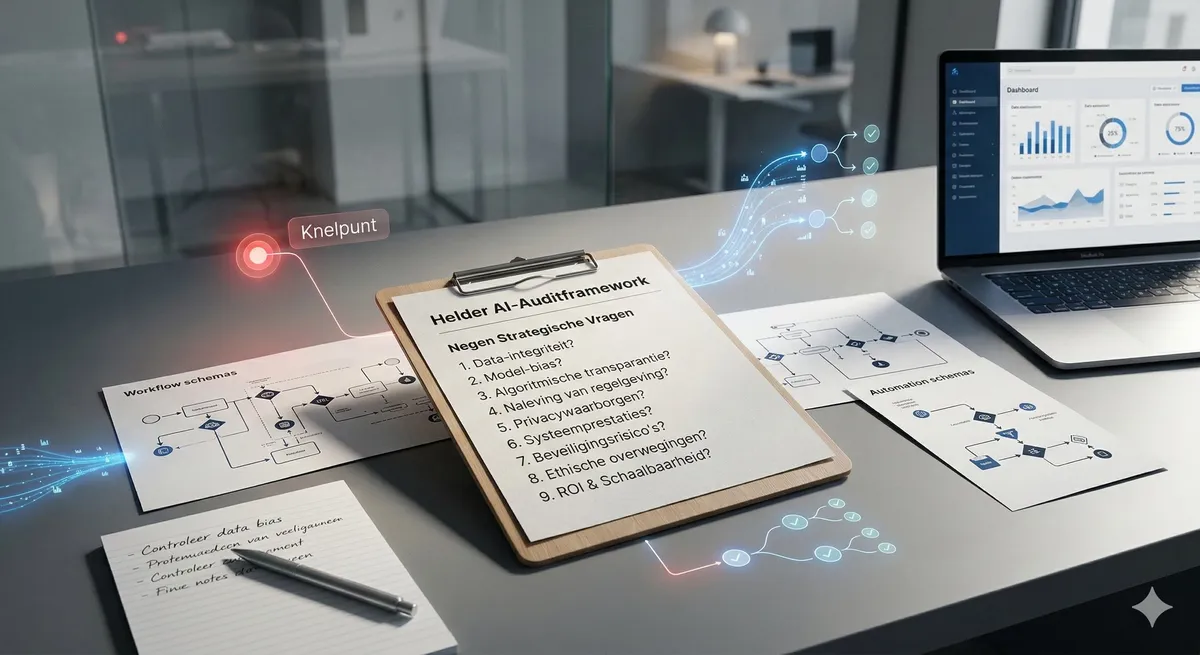
If the answer is no, you are probably not ready for an execution-focused partner yet. You likely need an audit, analysis, or strategic workshop first.
If the answer is yes, you can determine far more accurately whether workflow automation or system architecture is the real need.
2. Does the process mainly need to become faster, or is it already breaking under scale?
That is a hard dividing line.
If something mainly needs to become faster, more consistent, or more cost-efficient, an automation agency can be an excellent fit.
If processes are already becoming unstable as volume increases, then you usually have an architecture issue, and an AI agency is the better fit.
3. Are your systems and data in decent shape?
Many companies want to add AI immediately while their CRM, intake channels, or data flows are still messy.
Then the foundation needs work first. Otherwise, you automate mistakes, duplication, and noise.
4. Is there someone internally who can own it?
AI and automation without internal ownership remain fragile.
If nobody internally is responsible for process logic, maintenance, exceptions, or performance, choose a partner that prioritizes simplicity, visibility, and handover.
5. Are you looking for a project or an operational foundation?
This distinction shapes everything.
For a one-time exploration, a consultant makes sense. For a clearly scoped optimization project, an automation agency fits well. For a long-term growth layer with AI, automation, and operational control, you are more likely looking for an AI agency.
What to watch for in conversations with potential partners
Many companies sound convincing when they talk about AI. That tells you very little about whether they can deliver a system that actually works.
So pay attention to these signals.
Good signals
A strong partner:
asks sharp questions about bottlenecks and processes
talks about ownership, exceptions, and monitoring
thinks in business outcomes, not just tools
can explain how handover and maintenance are handled
is willing to say when something should not be automated
Red flags
Be critical if a partner:
pitches tools immediately without understanding your operation
talks mainly about features instead of outcomes
has no answer for error handling or human handoff
is vague about documentation and transferability
presents AI as a substitute for poorly designed processes
That last point may be the biggest warning sign of all. AI strengthens good processes. It rarely rescues bad ones.
Choosing an AI partner is not really about AI
That may sound contradictory, but it is true.
The choice between an AI consultant, automation agency, and AI agency is not ultimately about who can speak most impressively about AI. It is about who fits the stage, maturity, and bottleneck of your business.
A consultant creates clarity.
An automation agency improves defined workflows.
An AI agency builds a scalable operational system.
None of those three is automatically better. They are simply suited to different situations.
Companies that understand that difference make better decisions. They build less technical debt, see returns from AI faster, and create an operational advantage that competitors cannot easily copy.
Conclusion: do not choose the smartest AI partner, choose the right one
The wrong partner often gives you something that looks impressive in the short term but creates extra complexity over time. The right partner delivers not just technology, but structure, ownership, and calm inside the operation.
So before choosing an agency, consultant, or specialist, ask yourself this:
Do I primarily need clarity, a concrete automation solution, or a scalable system that solves an entire bottleneck?
Once you can answer that clearly, the decision becomes much easier. You can also explore our services to see how we approach each model in practice.
If you want clarity on your biggest bottleneck before choosing a tool or partner, start with the Free AI Audit.